Project study / Platforms
Active Development
Collectiv v2
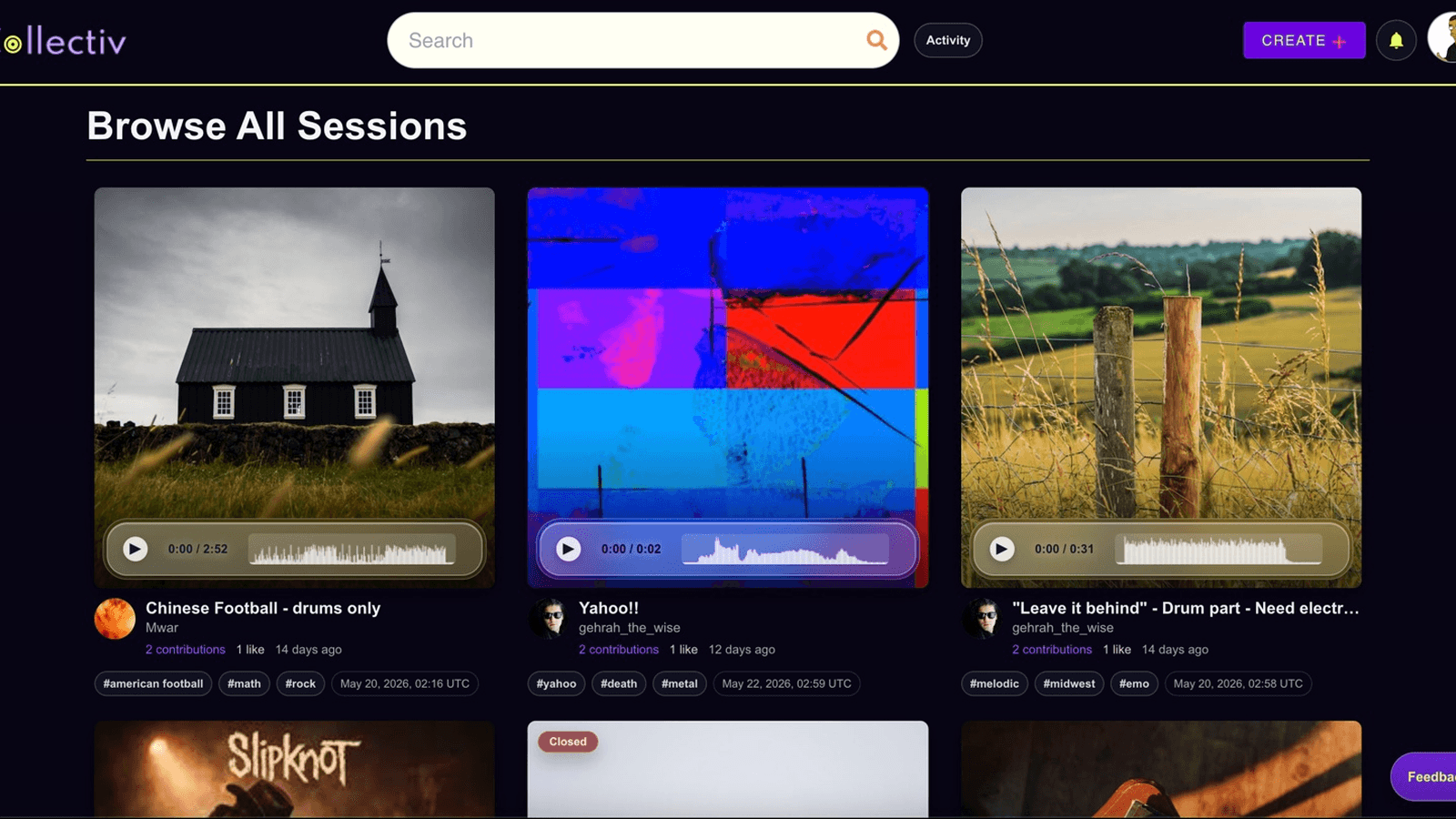
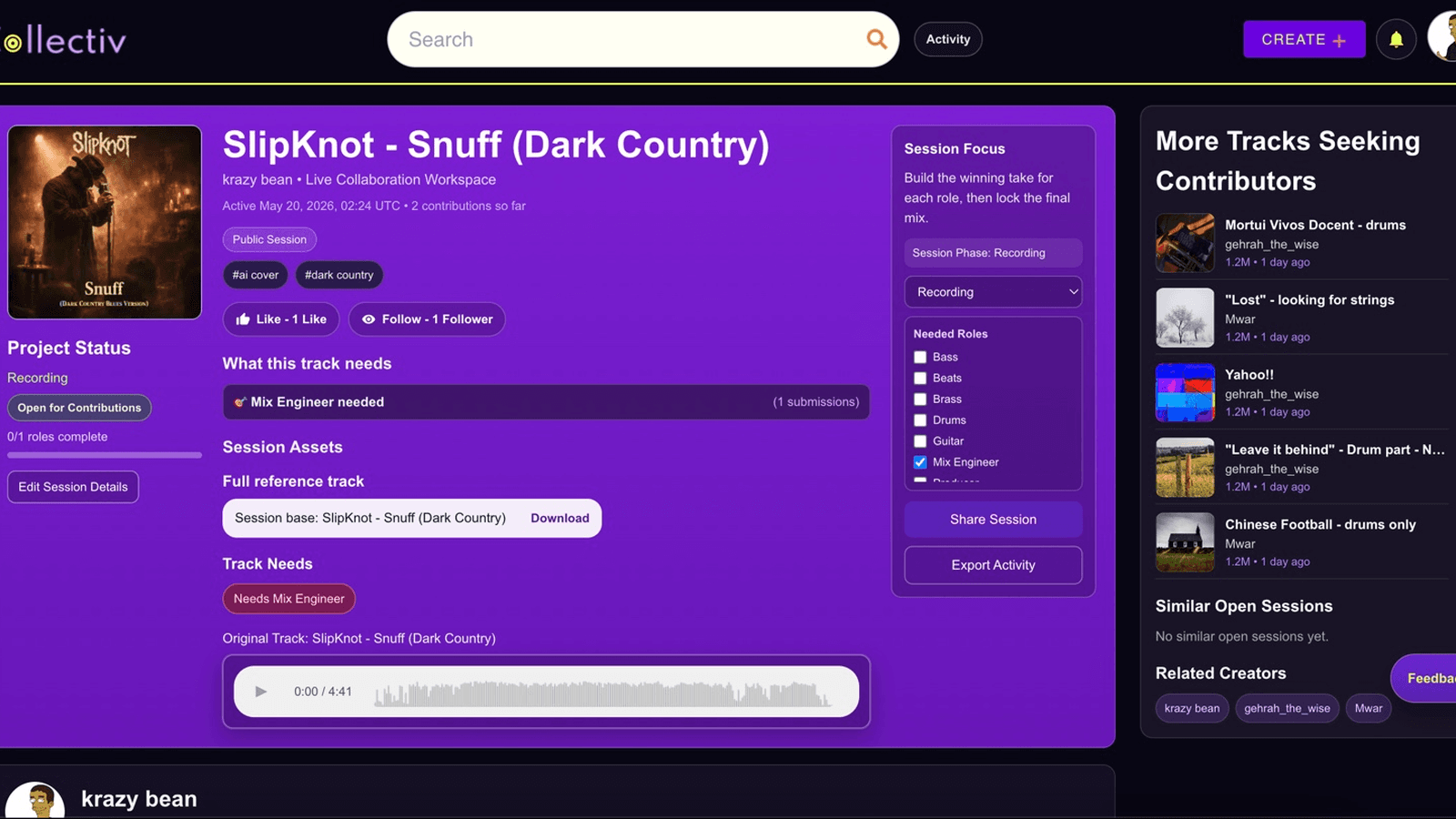
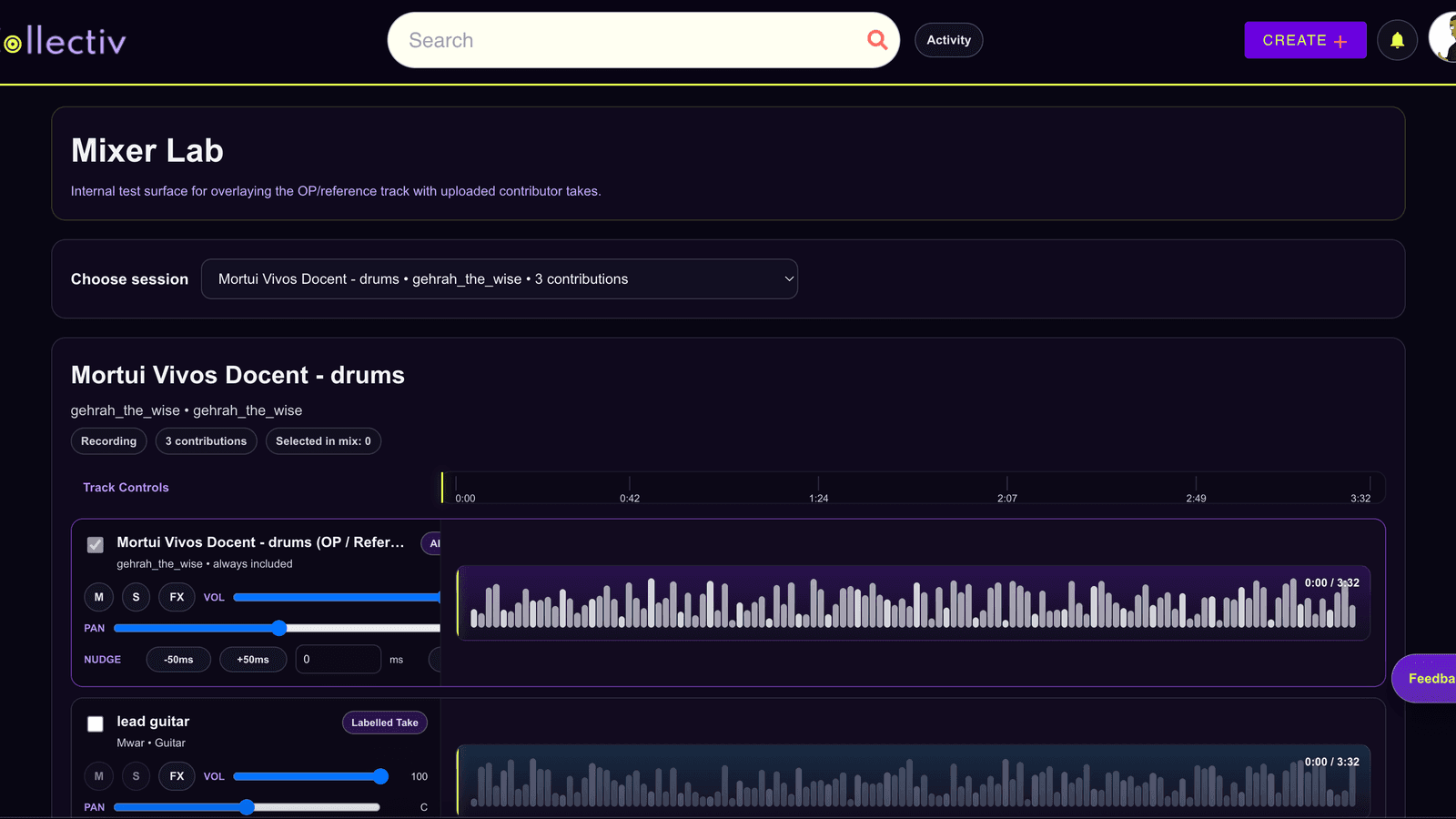
Collaborative music platform supporting sessions, contributions, notifications, profiles, royalty workflows, and mixer experiences.
A product-heavy platform that balances creator experience, session logistics, and platform workflows across multiple user roles.
Session Workflow
- Creator
- Session
- Contributions
- Review
- Finalize
Media Pipeline
- Upload
- Cloudflare R2
- Metadata
- Playback
- Mixer
Royalty Model
- Contributors
- Split Allocation
- Approval
- Final Release
01 / Product thesis
Keep the session at the center.
Fragmented work
Creative collaboration tools usually break the workflow into separate products for communication, file handling, contributor context, and downstream session coordination.
That fragmentation makes it harder to keep momentum once a session moves past the first upload and into review, notifications, profile context, royalty awareness, and mixer handoff.
One product context
Collectiv v2 brings those steps into one product surface so a session can move from invite to contribution review and final coordination without a brittle chain of side tools.
The system centers around explicit workflow state, user roles, and a data model that treats notifications and contributor visibility as core product behavior rather than afterthoughts.
02 / Workflow and boundaries
State, media, and contributor context move together.
App Router frontend with typed server-side product flows and strongly scoped data loading.
Relational data model for sessions, contribution activity, notifications, profiles, and royalty-aware workflow state.
Media storage and deployment choices optimized for iteration speed while keeping the product model maintainable.
Workflow Model
Session state, contribution review, participant context, and royalty-aware flows are modeled explicitly so the product can evolve without scattered logic.
Storage Surface
Postgres handles relational state while object storage supports media workflows and delivery without forcing custom infrastructure too early.
Implementation evidence
The product in use.
Current state / next work
What exists, and what follows.
Active Development
Started Q4 2024 · Last updated June 2026
Next direction
- Expand royalty workflow support into clearer review and export paths.
- Strengthen mixer-specific tooling and collaboration timelines.
- Add richer activity history and contributor-facing session visibility.
Multi-user creative products become complex through workflow edge cases long before they become complex through scale.
Working lesson / Collectiv v2